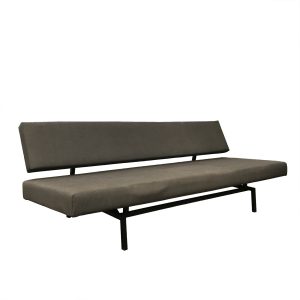
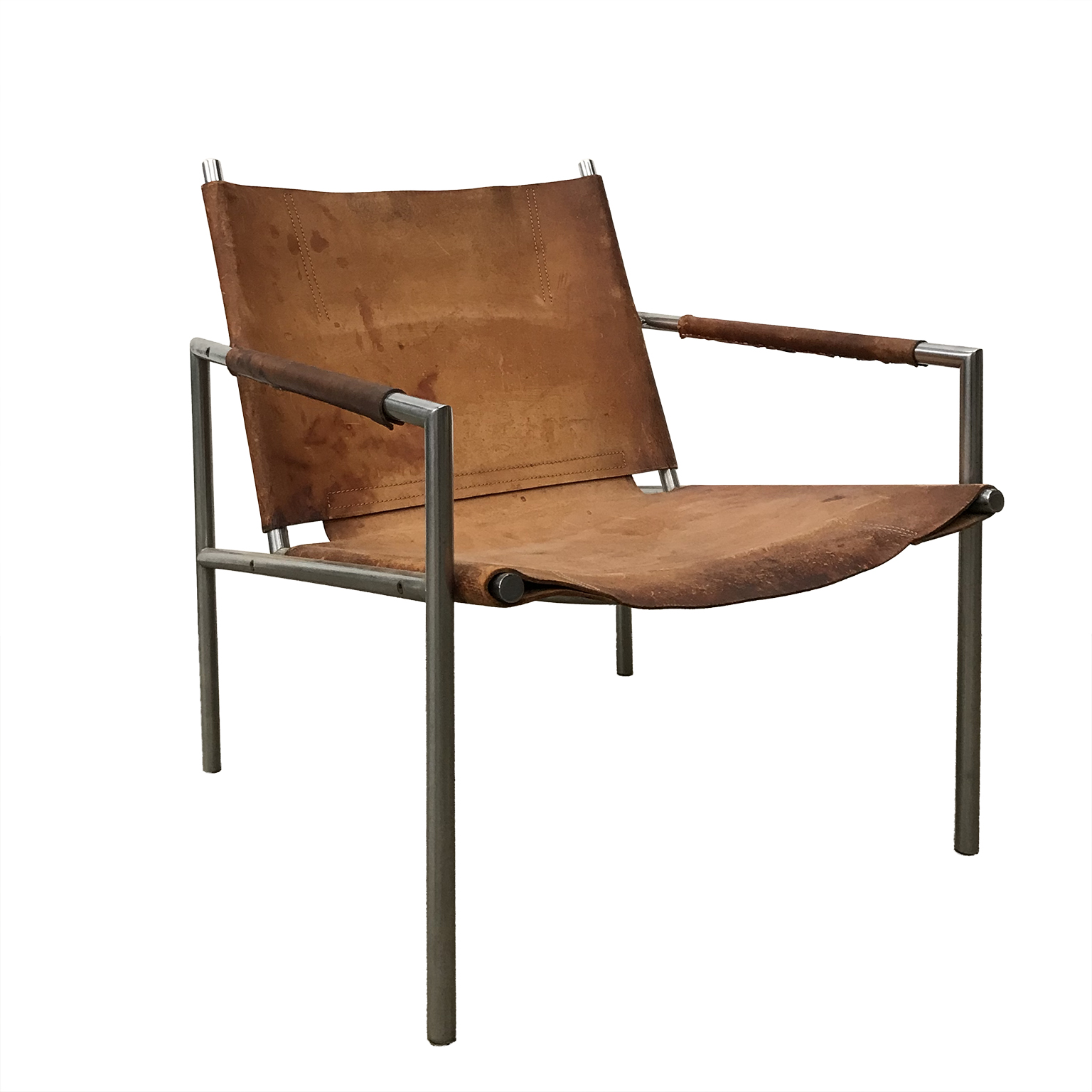
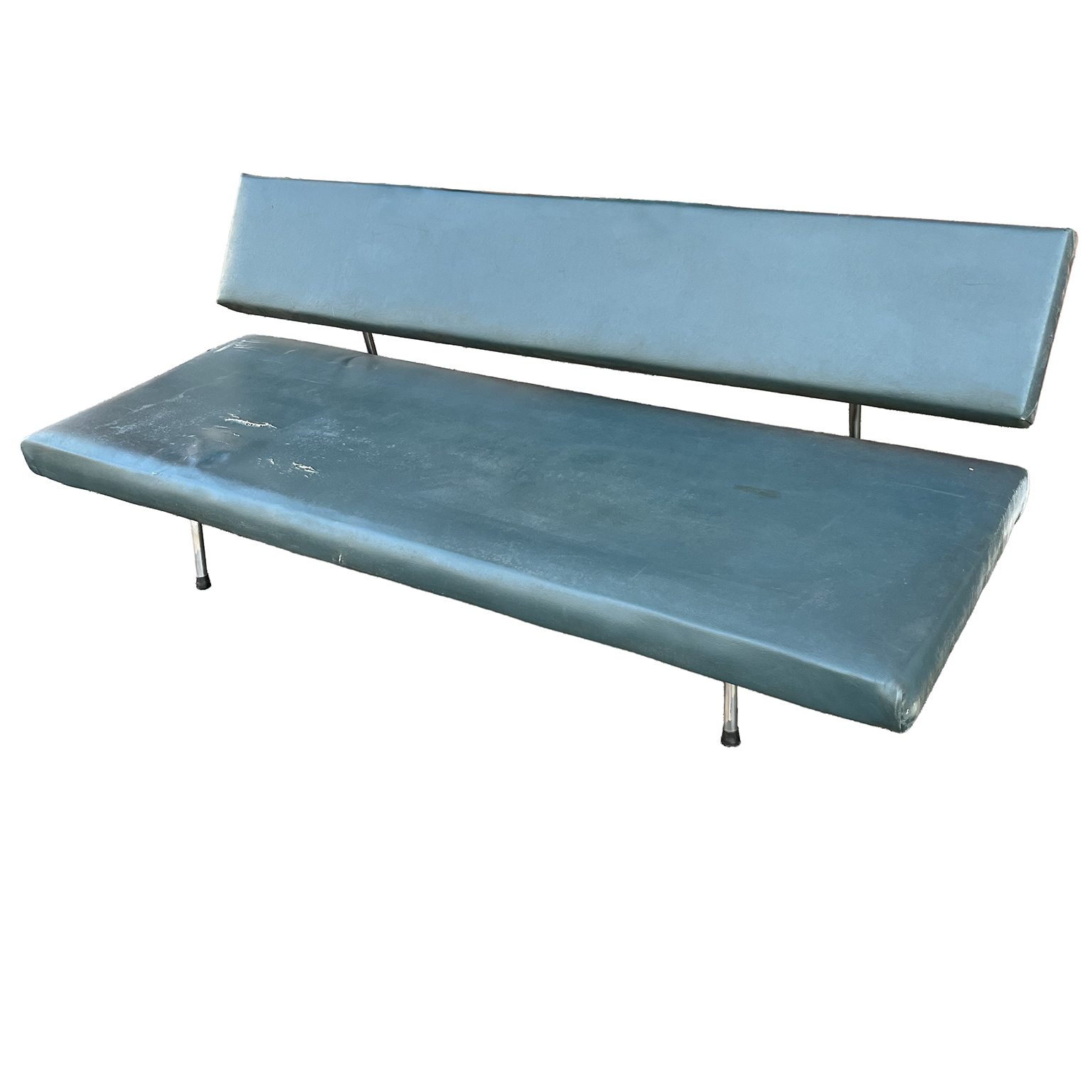
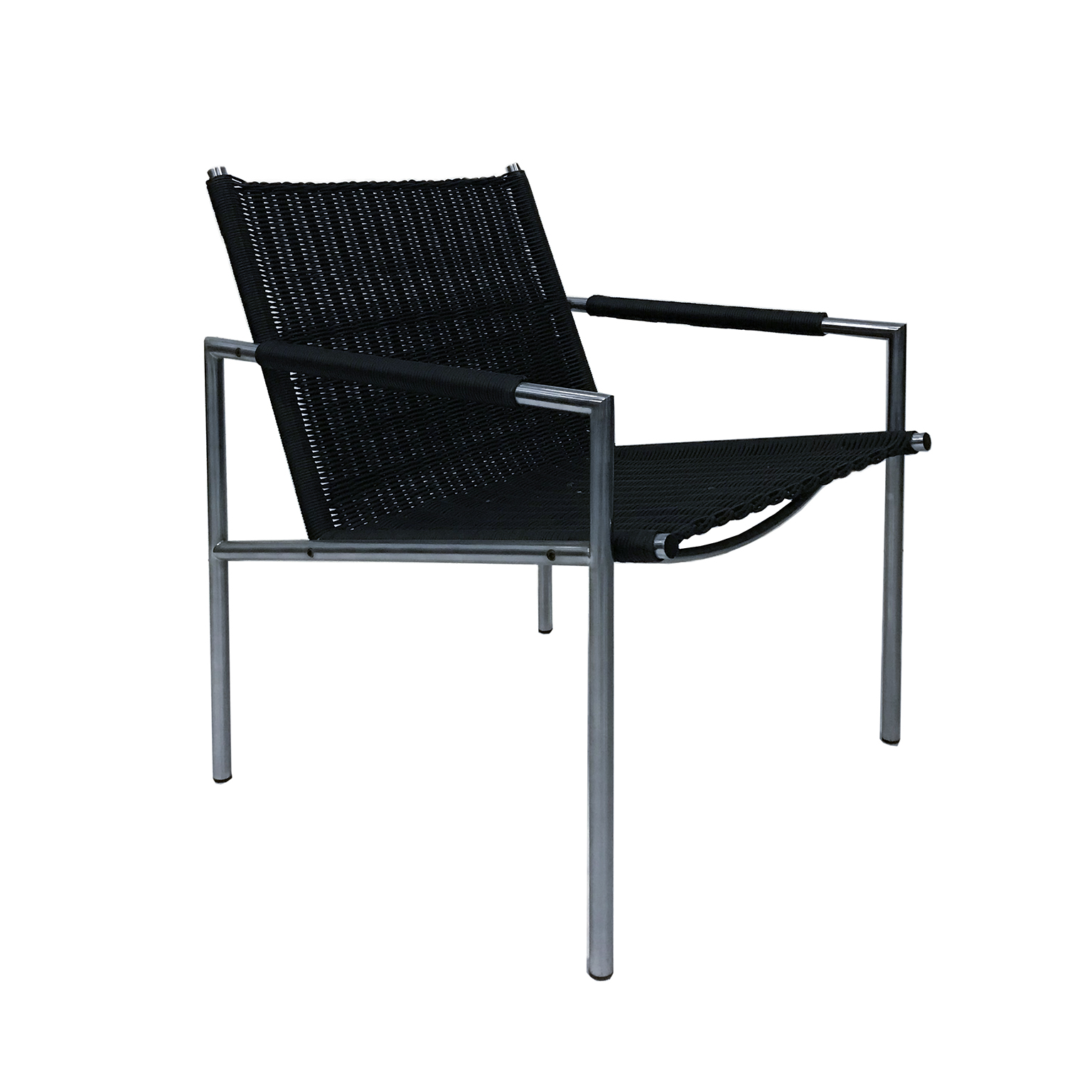
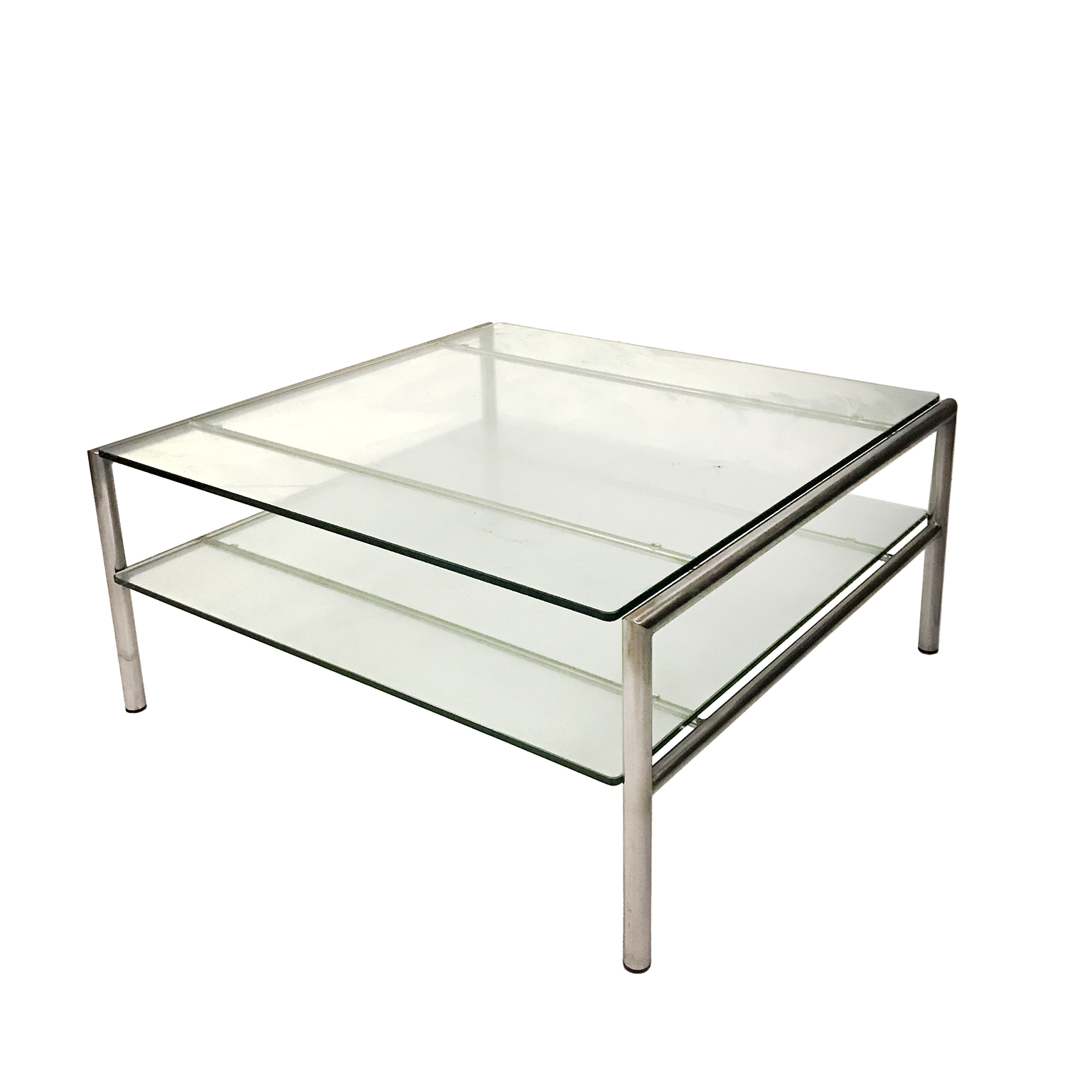
Martin Visser (1922-2009) studied hydraulic engineering at the MTS (intermediate technical school). Later, he worked as an architectural draftsman, designed his first furniture for a friend, and worked in the furniture department of De Bijenkorf in Amsterdam. Through his work at De Bijenkorf, Visser came into contact with Weverij de Ploeg and ‘t Spectrum, and in 1954, Spectrum asked him to join the company as a designer and head of collection development. From the late 1950s onward, Martin Visser’s functional designs defined the face of ‘t Spectrum’s collection. The development of his furniture design therefore paralleled the face of the collection (sofa BR 02.7, armchairs SZ 01, SZ 02, and SZ 03, dining chairs SE 05, SE 06, SE 07, and SE 08, tables TE 06.7 and TC 06). Visser had a strong preference for handcrafted furniture. Many of his pieces have an industrial look, but are largely handcrafted. He also pushes the limits of technique: ideally, he wants to create something that is actually impossible! For example, he doesn’t bend the tubes, but saws and welds them. His honest use of materials, the clear construction, and lack of ornamentation reflect Visser’s great admiration for Berlage and pre-war functionalism. He strives to create simple furniture with as little material and as simple shapes as possible. In the 1960s, his furniture becomes less austere and looks more solid, voluminous, and comfortable. Consequently, the furniture also becomes more dated. From 1978 to 1983, Visser was the chief curator of modern art at the Boymans-van Beuningen Museum in Rotterdam. After this period, he returned to design. In his final designs, Visser abandons his notion of simple and clear design. His new work is much more baroque than the austere designs that made his name. His inspiration now comes more from the world of art than from that of design. The constructive aspect remains important, but he experiments with new forms and materials such as cardboard and perforated steel sheet. Under the influence of his wife, Joke van der Heijden, color plays a significant role. Joke provides the color and decorative elements that accentuate the form and construction. Alongside all these activities, Visser is building a significant private collection of contemporary art. In December 1998, Martin Visser’s career was recognized with the lifetime achievement award for design.
BeBoB was founded with a focus on recycling and started as a foundation, not profit-based.
For almost 40 years, it has specialised in collecting and selling midcentury design, focussing on the right matches more than how to get the best profit.
BeBoB charges reasonable prices for vintage and collector’s items.
Vintage Prices are approximately 35% to 65% of the new-to-order price, if items are still new in production. If not anymore in production they become collectibles.
Collectibles are also the original pieces from the design period of the items, which are still in production and are more expensive, but often a good investment out of scarcity.
BeBoB charges reasonable prices for vintage and collector’s items.