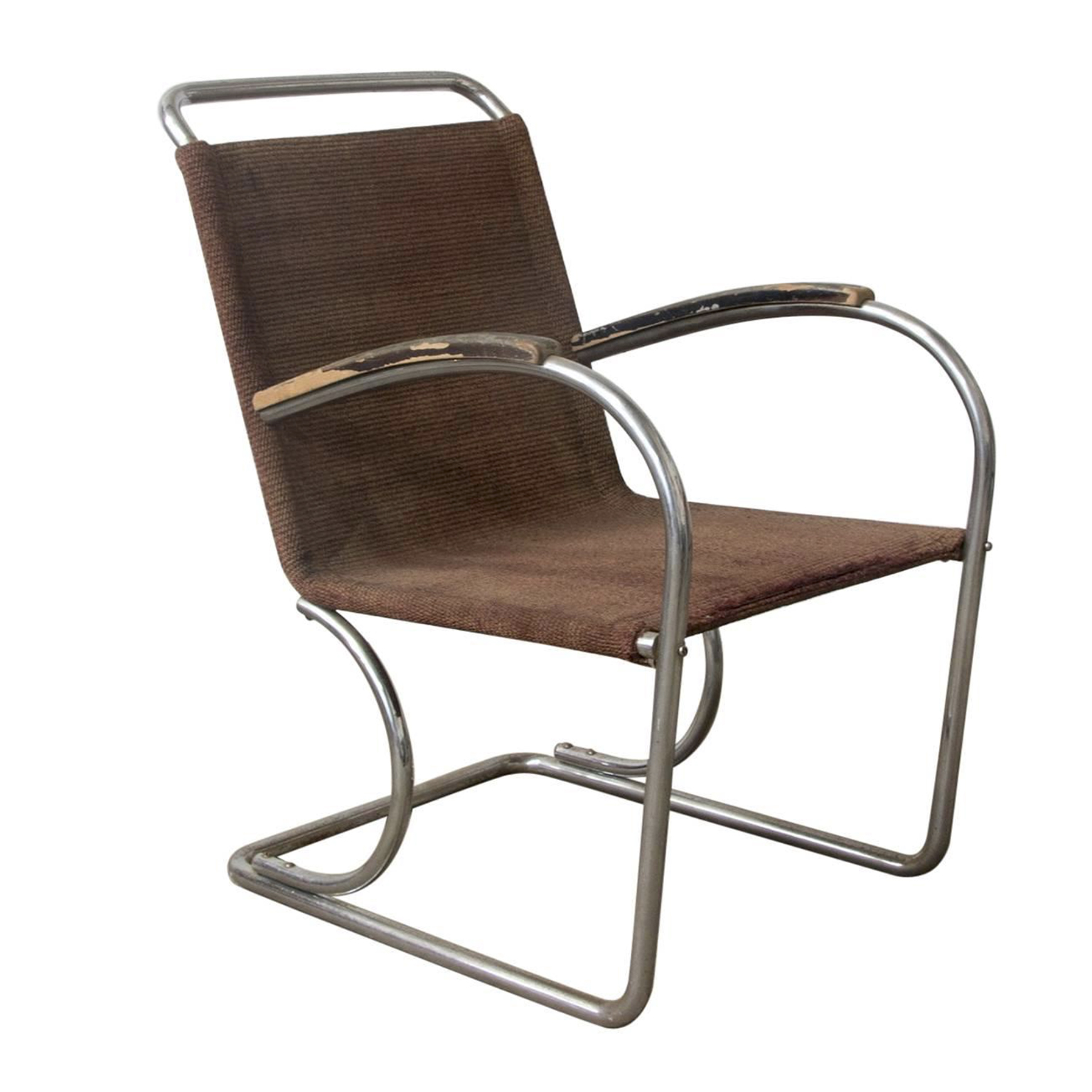
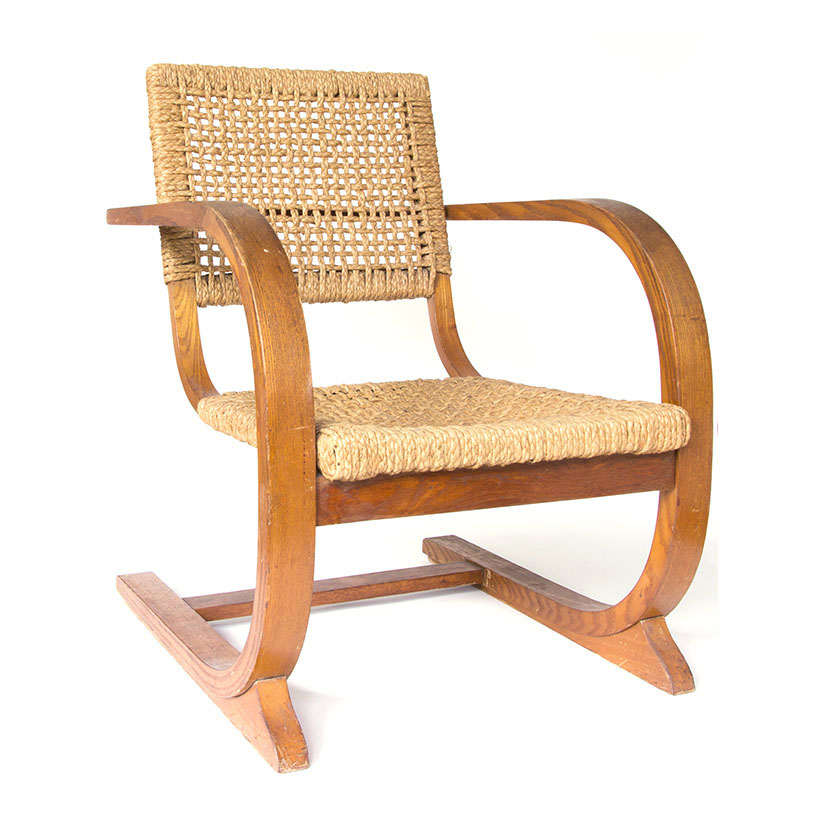
Bas van Pelt Bas J. van Pelt, Dutch furniture designer and interior designer Place/date of birth Dordrecht 1900 Place/date of death Sandbostel 24 May 1945 Winning a small competition in 1924 was enough for Bas van Pelt to definitively choose the design profession. After having worked in a printing house, he ended up in Overschie in 1927, in the furniture factory of J.C. Jansen, his later father-in-law, the furniture manufacturer J.C. Jansen from Overschie. Here he drew his first designs in various styles. Sometimes in the style of the Amsterdam School, sometimes in a sober, austere style that seems more related to that of designers such as Hendrik Wouda (1885-1946) or Jan Muntendam (1882-1938). My Home Home Furnishings In 1931, at the urging of his father-in-law, Bas van Pelt finally took over the furniture store “My Home Home Furnishings” in The Hague and built a successful business in the field of modern home furnishings. From the outset, My Home/Bas van Pelt focused on modern furniture, the design of which in The Hague in the early 1930s was still strongly influenced by the designs of Wouda, Alons, and Spanjaard. Van Pelt was one of the first designers to also extensively incorporate products from third-party manufacturers, such as Thonet, D3, and Gispen, which were more affordable due to their series production, in his interior designs. This approach led to the company’s flourishing, resulting in branches in Amsterdam, Enschede, and Maastricht (Kunstzaal de Gulden Roos). Collaboration with Jan Piets since 1936: On May 10, 1940, during the bombing of Rotterdam, the warehouses on Schouwburgstraat in The Hague were destroyed by a stray bomb. This event prompted Bas van Pelt to actively participate in the resistance. Between 1943 and 1945, the country house “de Pal” in Emst was used as a safe house and ammunition depot. Officially, Bas van Pelt remained the director of my home, but his father was registered as director in his place. The business was run by two employees during the final years of the war. From May 1944 onward, Bas van Pelt was imprisoned in various concentration camps and died on May 24, 1945, a few days after the concentration camp was liberated. After the Second World War, Van Pelt’s widow first took over the management of the company. From 1953 onward, she was increasingly assisted by her daughter Janni and her husband, Dick Brouwers. These young designers transformed the company into a true Goed Wonen firm, which they renamed “Bas van Pelt Interior Architecture” in 1956 as a tribute to its founder. The company thrived and employed several designers, including Cor van Alten, Bram van den Berg, and Bob Windau. From the 1970s onward, the interior designs increasingly featured functionalist furniture made in the Netherlands or internationally.
BeBoB was founded with a focus on recycling and started as a foundation, not profit-based.
For almost 40 years, it has specialised in collecting and selling midcentury design, focussing on the right matches more than how to get the best profit.
BeBoB charges reasonable prices for vintage and collector’s items.
Vintage Prices are approximately 35% to 65% of the new-to-order price, if items are still new in production. If not anymore in production they become collectibles.
Collectibles are also the original pieces from the design period of the items, which are still in production and are more expensive, but often a good investment out of scarcity.
BeBoB charges reasonable prices for vintage and collector’s items.