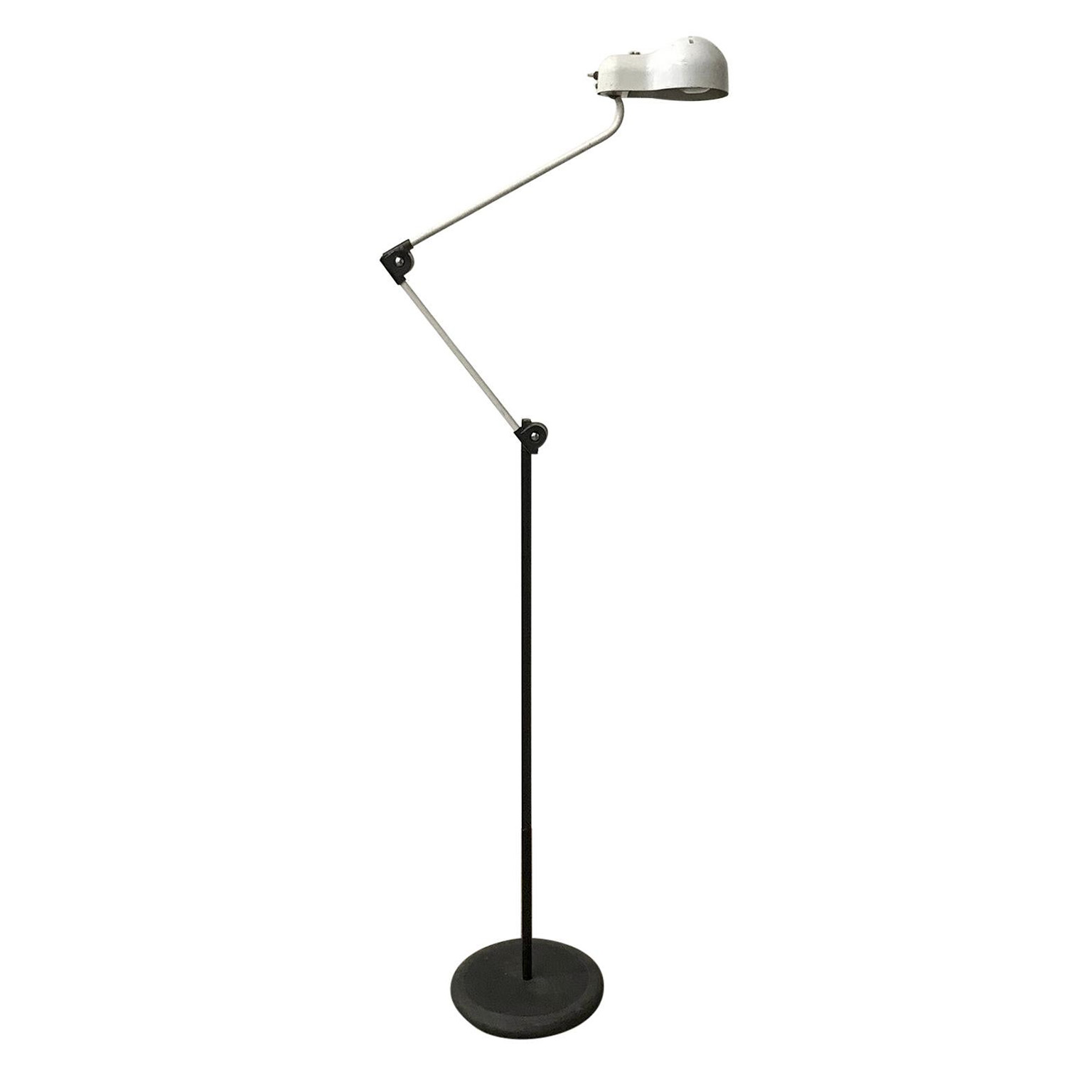
Joe Colombo (1930), an Italian designer, was born in Milan in 1930. He studied art and architecture successively, but left without a degree. In the early 1960s, he devoted himself to design. In his own studio, Colombo began creating designs for “all social classes.” Thanks to the pliability of plastic and the development of new foam materials, the 1960s allowed for endless experimentation with shapes and colors. It was the era of plastic furniture. Chairs, lamps, ashtrays, trolleys, and tables were made of plastic, preferably in bright colors like orange and green. Interiors of that time were also brightened up with orange walls. The main representatives of this pop art-inspired design are Verner Panton and Joe Colombo. In a short time, the Italian designed a vast number of products that found their way into homes and offices in many countries. He also designed portable units for the home. His mini-kitchen is on display at the Museum of Modern Art in New York. Joe Colombo was the man behind, among other things, the ‘Optic’ clock and the famous poker table. The table, a design from 1968, with its green felt and integrated ashtrays on the four corners, is still in production. One of his most famous designs is the ‘smoke glass,’ shaped so that you only need to hold it with your thumb, leaving the other fingers free to smoke a cigarette. The famous Colombo glass is included in the collection of the Stedelijk Museum in Amsterdam. Colombo was also a thinker. He didn’t just come up with something, but did so based on the vision that a designer is the creator of the environment of the future. The Italian had clear ideas about that future. In the 1960s, he already knew that distance would eventually become a thing of the past and that people would increasingly work from home. He couldn’t (yet) implement his plans for mass production in Milan. Thanks to several sponsors, Colombo was finally able to start producing prototypes. One of those prototypes in 1969 was the interior design for a ‘house of the future.’ In ‘Visiona,’ all the walls that normally divide a house into rooms are omitted. Instead, furniture blocks and movable kitchen and bathroom units are used. That same year, Colombo designed the convertible bed for his own home, featuring a movable canopy above the bed. The Boby trolley from 1970, originally designed for use next to the drawing board. At just 41 years old, Italian designer Joe Colombo died a far from inglorious death in 1971. In the short period during which this man, considered by many to be brilliant, had devoted himself to design, he had managed to establish himself among internationally renowned designers. His work is included in the collections of institutions including Boijmans Van Beuningen, the Stedelijk Museum in Amsterdam, and the Museum of Modern Art in New York.Some of his designs are still in production. Joe Colombo, with his red beard and perpetual pipe in the corner of his mouth, was known as a striking man with a wide range of interests. He was passionate about skiing, cars, and technology. His first designs, which were never realized, were ski bindings, toolboxes, and cars. A year before his death, he even designed a trailer. He was a strong believer in the future, and his work vividly reflects the 1960s, when the future suddenly seemed to be drawing closer. Joe Colombo’s future was an anti-nostalgic one, in which intelligent technology would aid every human activity and form the basis for a completely new and better way of life. We don’t know what his visionary view would have been in the bleak years that followed. But his products still tell us the story of a better future today.
BeBoB was founded with a focus on recycling and started as a foundation, not profit-based.
For almost 40 years, it has specialised in collecting and selling midcentury design, focussing on the right matches more than how to get the best profit.
BeBoB charges reasonable prices for vintage and collector’s items.
Vintage Prices are approximately 35% to 65% of the new-to-order price, if items are still new in production. If not anymore in production they become collectibles.
Collectibles are also the original pieces from the design period of the items, which are still in production and are more expensive, but often a good investment out of scarcity.
BeBoB charges reasonable prices for vintage and collector’s items.